


The complete guide
Choosing Shatter-Resistant Champagne Flutes
Champagne flutes see the roughest handling of any glass in the house: passed hand to hand at a toast, set down on a wobbly outdoor table, knocked over by an elbow on the dance floor. That's the case for shatter-resistant plastic over real glass at any event, and it's worth knowing what actually makes a plastic glass shatter-resistant before you buy one.
Why Tritan-style champagne flutes look and feel like glass
Tritan-style champagne flutes look like glass until you drop one. Cheaper clear plastics lose their shine after a few trips through the dishwasher, but a flute made from Tritan-style copolyester keeps its colour and gloss through repeated washing, so it still looks the part months after you bought it.
The three types of shatter-resistant plastic drinkware
Genuinely shatter-resistant plastic glasses are made from one of three plastics: polycarbonate, Tritan-style copolyester, or polypropylene. Glasses made from other plastics, like acrylic or SAN, aren't truly shatter-resistant. They're sometimes labelled "break-resistant" or "shatter-resistant," but they can still crack if dropped on a hard surface.
Here's the breakdown of the three main types.
1. Tritan-style copolyester
Tritan-style copolyester is fast replacing polycarbonate as the preferred material for shatter-resistant glasses that look like real glass. It was developed as a BPA-free alternative to polycarbonate, which contains BPA. Whether you're after champagne flutes, wine glasses, or stemware, you'll find it made from this type of copolyester.
2. Polycarbonate
Plastic glasses can also be made from durable polycarbonate. Like Tritan-style copolyester, polycarbonate glasses are shatter-resistant, dishwasher safe, and deliver a glass-like look. Polycarbonate is a tried-and-tested material that holds up for years in both commercial and household use, and it's common in busy restaurants, hotels, and outdoor or poolside service.
3. Polypropylene
Polypropylene glasses are more casual than the glass-like Tritan-style and polycarbonate options. They're low-cost and come in solid colours or semi-opaque finishes. Polypropylene has a softer, slightly rubbery feel than glass-like drinkware, closer to the plastic used in kitchen storage containers, and it's a popular choice for kids' drinking glasses and casual events.
What to avoid: acrylic and SAN plastic
Acrylic and a related blend called SAN plastic are durable and reasonably priced, but they aren't as tough as polycarbonate, Tritan-style copolyester, or polypropylene. The main difference is that acrylic and SAN glasses can crack if dropped on tile or another hard surface, unlike genuinely shatter-resistant drinkware.
Suited to weddings, poolside toasts, and everyday use
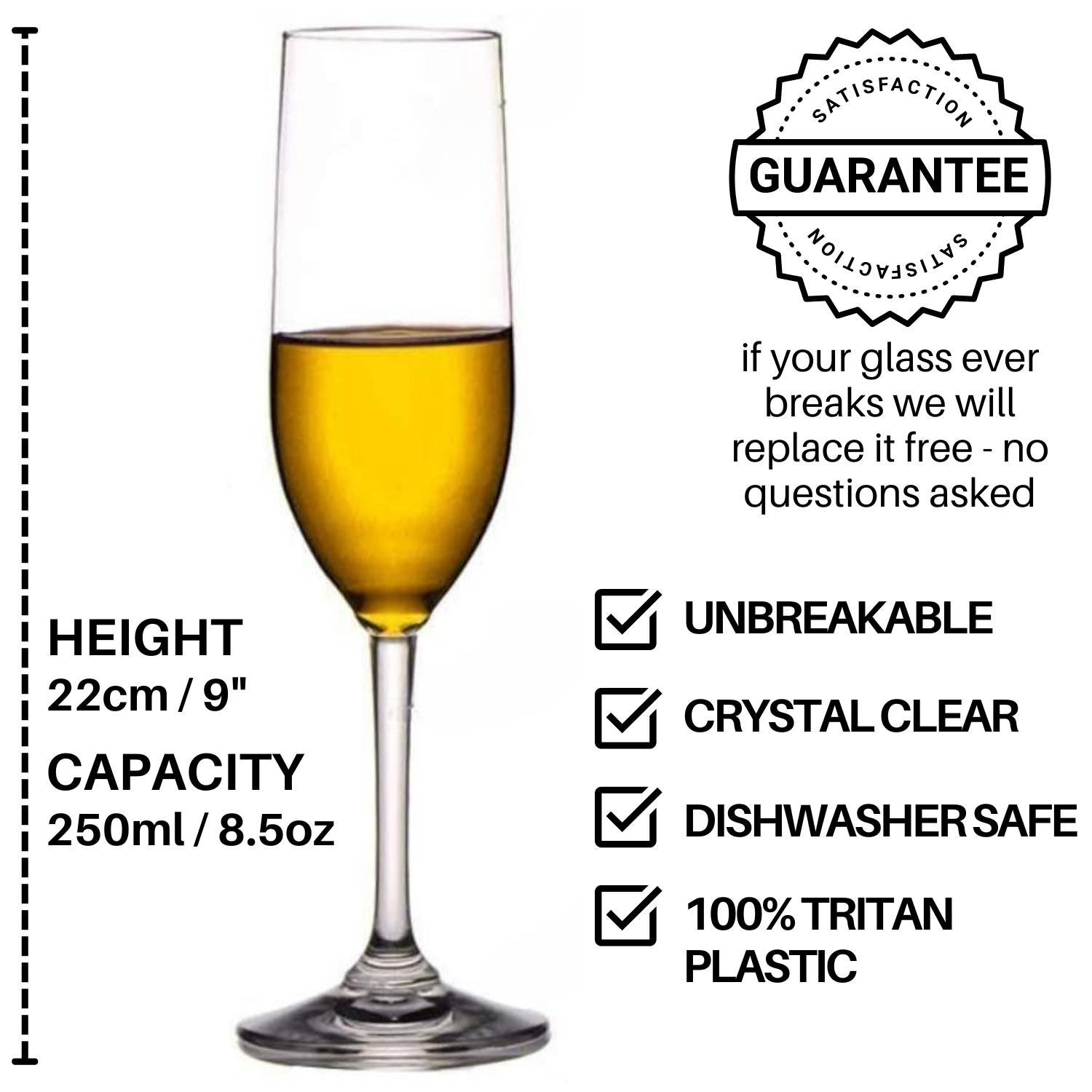
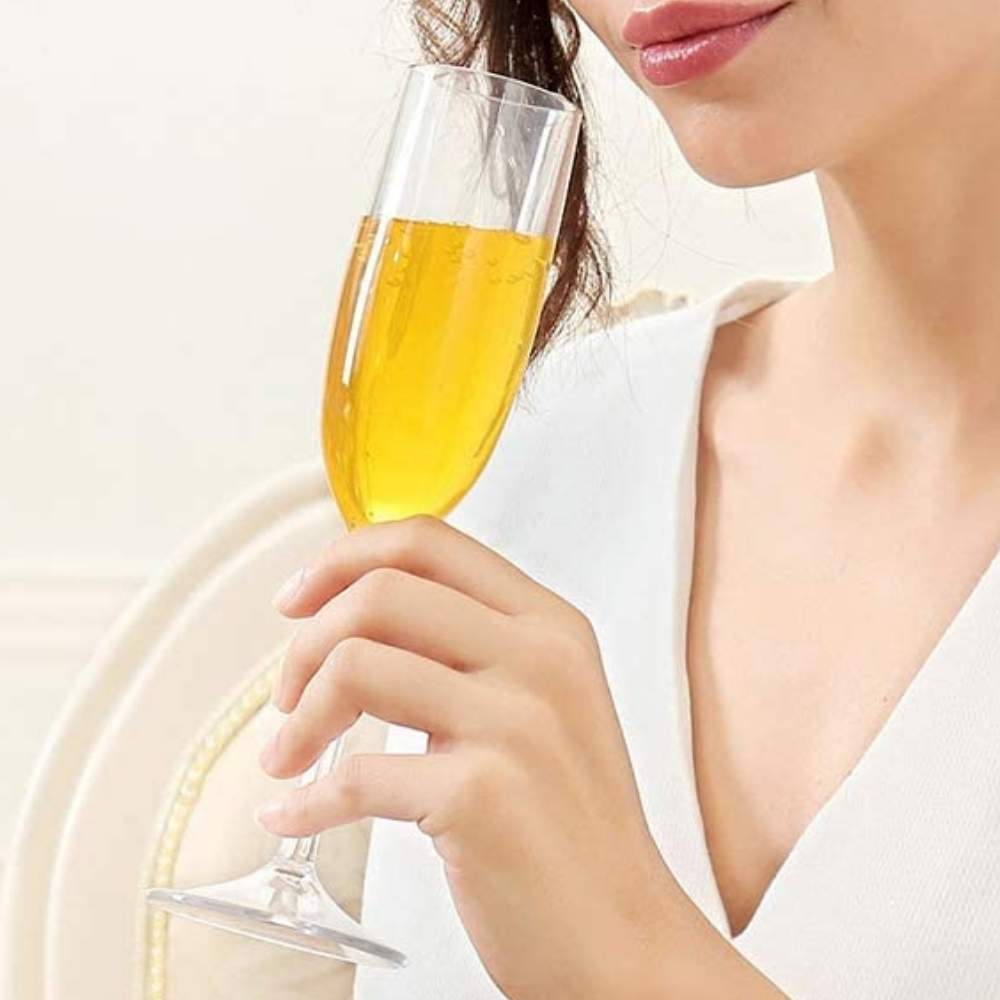
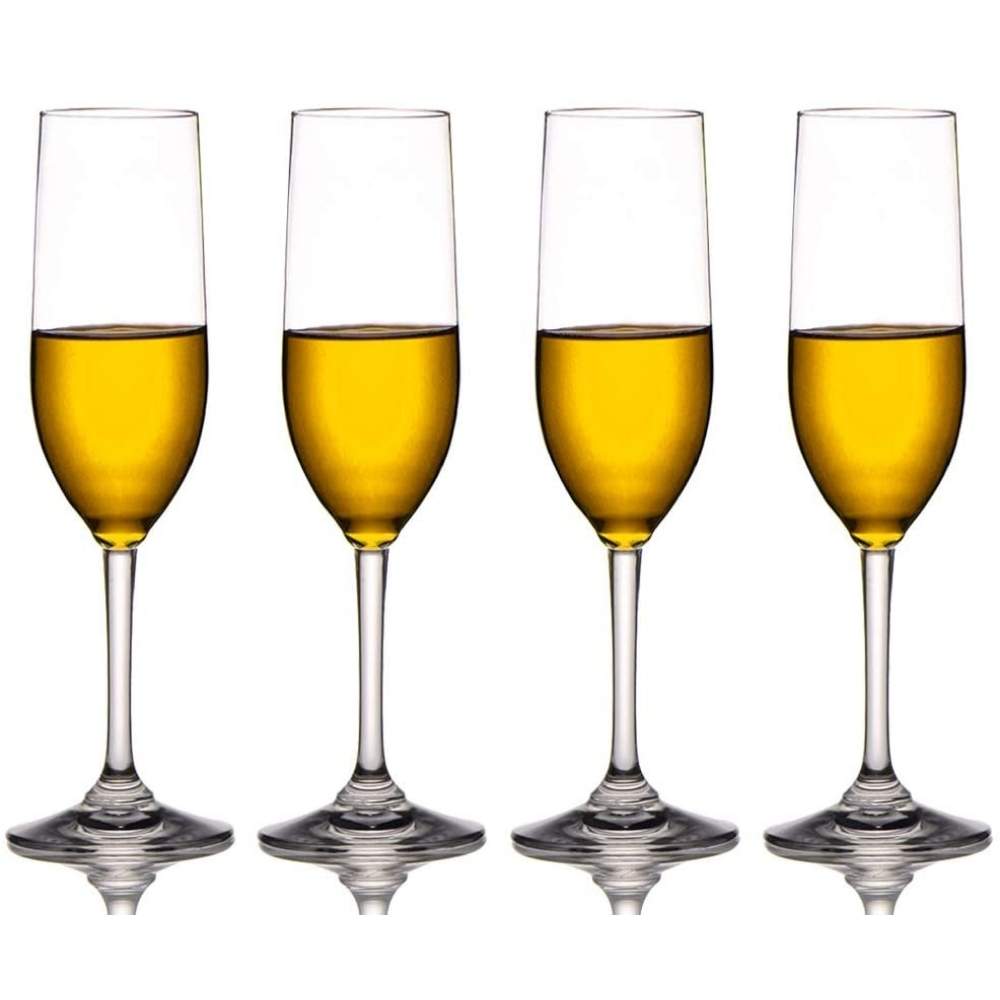
This flute holds 250ml (8.4oz), the standard pour for a champagne flute, and comes with a weighted base so it feels balanced in the hand rather than like a flimsy disposable cup. It's a practical choice for weddings, engagement parties, and any outdoor or poolside celebration where you want a proper-looking glass without the risk of broken glass underfoot. It also works well for prosecco, sparkling wine, mimosas, and other celebratory drinks, not just champagne.
Care and cleaning
This flute is BPA free and dishwasher safe. Avoid abrasive scourers or harsh scouring pads, which can dull the clear finish over time. Washed like a normal glass, it keeps its shine wash after wash.